
Olive: Live Video Chat App
AccordmobiSocial
4.42.00K Reviews
- Version
- 3.1.3
- Installs
- 10.00M
- Age Rating
- Mature 17+
Screenshots


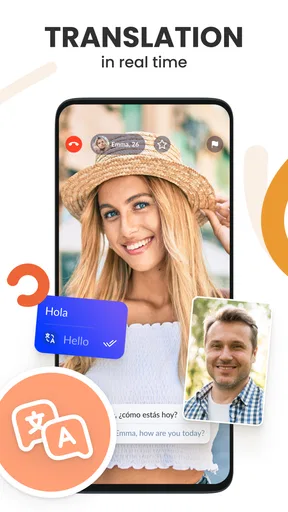
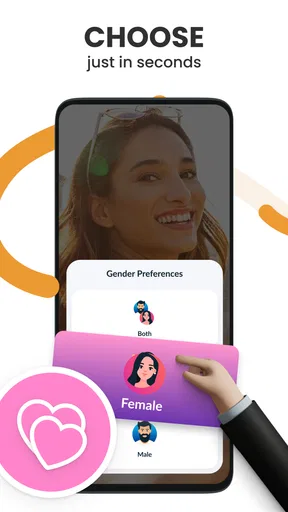
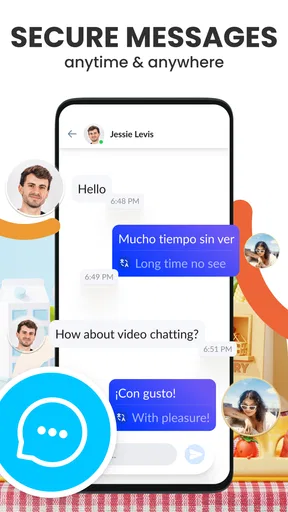

Our Review of Olive: Live Video Chat App
 Analysis by Appyee
My first impression of Olive: Live Video Chat App was that it understands the appeal of meeting someone without the delay of a long text conversation. The app places live video interaction at the center, so the experience feels immediate and personal from the start. I can see why it has attracted a large audience: it is free to download, belongs to the social category, and is made by Accordmobi for people who want to connect with others around the world.
That immediacy is also the app’s biggest test. A live video service can be exciting during the first few sessions, but novelty alone is not enough to earn a permanent place on my phone. After spending time with Olive, I think it works best as a spontaneous social outlet rather than as a replacement for every messaging app I already use. It can add variety to a quiet evening, but its lasting value depends heavily on whether I genuinely enjoy unscripted video conversations.
What the first week feels like
The first week is where Olive makes its strongest case. Video chat removes much of the guesswork that comes with text-based social apps. Facial expressions, pauses, tone and body language give a conversation more context than a short message can provide. For someone who is tired of endlessly swiping through profiles or waiting for replies, that directness can feel refreshing.
I would describe the atmosphere as casual and unpredictable. You are not opening Olive to manage a carefully organized list of close contacts. You are opening it to discover whether a live conversation develops. That distinction matters because it changes the way I use the app. I need to be in the mood to participate, not merely browse. A few spare minutes can turn into an entertaining chat, but the same open-ended format can also feel awkward when I am distracted or not ready to appear on camera.
The international angle is another reason the app can feel fresh. Speaking with people from different places gives ordinary conversations a sense of discovery. Even a short exchange can introduce a different accent, routine or perspective. I would not treat every interaction as meaningful, but the possibility of meeting someone outside my usual social circle is more interesting than another passive feed.
One practical tip is to use Olive when I have enough privacy and attention for a real conversation. Video chat is not something I can comfortably squeeze into every situation. If I am commuting, sharing a room, working or dealing with background noise, the experience becomes less enjoyable for both sides. The app is more rewarding when I approach it as an activity rather than something to leave running in the background.
Another useful habit is to decide what kind of interaction I want before opening it. If I am looking for a quick, light conversation, I can keep expectations modest. If I want to make a genuine connection, I need patience and a willingness to move past the first few awkward moments. That small change in mindset makes the service feel less like a random interruption and more like a social tool I am choosing deliberately.
Olive is rated for mature audiences aged 17 and above, which is an important part of the decision for families and younger users. I would not hand it to a child or treat the open video format as suitable for unsupervised use by minors. Adults should also remember that a mature age label does not make every interaction comfortable or trustworthy. I would end a conversation quickly if it crossed a personal boundary, and I would avoid sharing private details with someone I had just met.
Who gets the most from it
The app is a natural fit for outgoing people who enjoy meeting strangers, practicing conversation or adding an international element to their free time. It may also appeal to someone who has recently moved, works remotely or simply wants a social option that does not depend on already knowing the other person.
I can imagine using it after dinner when I have half an hour available and want something more interactive than scrolling. A realistic scenario would be a person living alone who wants a brief human connection after a quiet day. Olive can fill that gap better than a static social feed because it asks me to participate rather than just consume posts.
It is less suitable for someone who wants carefully filtered contacts, predictable conversations or a purely text-based experience. If privacy is my top concern, I may prefer a messaging service where I control exactly who can contact me. If I dislike being on camera, the central idea of Olive will feel like a burden rather than a benefit. The app cannot solve that basic mismatch in preference.
Does it still matter after the novelty fades?
The first month is when I start asking a different question: what brings me back after the initial curiosity disappears? Olive has recurring value when I use it for a clear purpose, such as meeting people outside my normal circle or having occasional live conversations when my usual social options feel repetitive. It is harder to justify opening every day without a personal reason.
That does not make the app weak. Some social tools are valuable precisely because they are occasional. I do not need Olive to become a daily habit for it to be worthwhile. In my view, it works better as a flexible addition to a social routine than as the main place where I maintain relationships. The distinction protects it from becoming repetitive while preserving its strongest quality: immediacy.
Compared with conventional messaging apps, Olive offers more presence but less control. A normal chat gives me time to think, edit a message and respond when convenient. Live video gives me a faster sense of whether a conversation has energy, but it also demands attention in the moment. Compared with social feeds, Olive is more active and personal, yet it lacks the effortless browsing rhythm that makes feeds easy to revisit.
That trade-off explains why I would not replace my existing communication tools with it. For close friends, family and planned conversations, I prefer services built around known contacts. For spontaneous encounters, Olive has a clearer identity. It occupies the space between casual browsing and a scheduled video call, although the experience is naturally less predictable than either one.
People often want to know whether a free app can remain free in practical use. Olive is free to download, but it includes in-app purchases ranging from $0.49 to $199.99 per item. I would approach those purchases carefully. The wide range means I should not assume that every useful part of the experience is included at no cost, and I would check each purchase prompt before confirming anything. Setting a spending limit in advance is sensible, especially when an app encourages quick, emotionally engaging interactions.
The app has reached over ten million installs, with an average rating of 4.4 from around 138 thousand ratings. Those figures suggest that Olive has found a substantial audience, but they do not guarantee that every conversation will suit me. Social apps are unusually personal: one person may enjoy the randomness while another finds it tiring. I would treat the popularity as a reason to try it, not as proof that it matches my personality.
The maintenance burden is easy to underestimate
Olive does not require the same kind of upkeep as a productivity app, but live social services still create maintenance work. I need to decide when I am available, protect my privacy during conversations and manage my expectations about strangers. I also need to keep my device ready for video use, including a suitable setting, a stable enough connection and enough attention to participate properly.
The most overlooked maintenance task is emotional rather than technical. A disappointing conversation can make the entire app seem worse than it is, while an unusually good exchange can make me expect too much from the next session. I get better results when I judge Olive across several visits instead of treating one awkward interaction as a final verdict.
My practical workflow would be simple. I would open the app only when I can give it focused attention, leave immediately when a conversation feels uncomfortable, and avoid using personal information as a shortcut to trust. I would also review purchase prompts with the same care I use for any free social app. These habits do more to improve the experience than repeatedly opening the app out of boredom.
The current version is 3.1.1, and the app supports devices running at least iOS or Android version 9. That makes it accessible to people who are not using the newest phone software, although the quality of a video conversation will still depend on the device and connection in everyday use. I would check compatibility before planning to use an older phone as my main video-chat device.
Where fatigue begins
The main source of fatigue is repetition. The promise of meeting someone new is exciting, but not every conversation has a natural rhythm. If I use the app too often without changing my expectations, the format can start to feel like a sequence of introductions that never develops into anything memorable.
There is also a social energy cost. Video requires more attention than reading messages, and I cannot always control how quickly a conversation becomes personal or uncomfortable. Even when nothing goes seriously wrong, constant readiness to respond can be tiring. This is why I would use Olive in short, intentional sessions instead of leaving it as a default way to fill every quiet moment.
Another limitation is that spontaneity works against consistency. If I want to build a dependable relationship, I need more than a first impression. Olive may help me meet someone, but maintaining a connection can require another communication method with clearer continuity. I would see the app as a doorway to social contact, not necessarily the complete structure for a long-term friendship.
Users who are uncomfortable with strangers, sensitive to unpredictable conversations or seeking strong control over their social environment should probably skip it. A standard messaging service, a private group or a video platform centered on known contacts may be a better choice. Olive is not failing when it feels too open; that openness is the point, but it will not suit everyone.
My long-term verdict
After the initial excitement fades, I still see a place for Olive, but it is a specific place. I would keep it for occasional live conversations, international social contact and evenings when I want active interaction instead of passive scrolling. I would not make it my only social app, and I would not recommend buying anything impulsively simply because a conversation feels engaging in the moment.
Accordmobi has built an app with a clear central idea: put people into live video conversations and let the social value come from the interaction itself. That focus is its strength. It avoids pretending that every user needs a complicated network of features. At the same time, the same focus means the experience depends strongly on my mood, boundaries and tolerance for unpredictability.
My honest recommendation is to try Olive when you want spontaneous human contact, not when you need a reliable replacement for private messaging. It earns lasting space on my phone as an occasional social option, provided I use it intentionally and keep spending under control. For outgoing adults who enjoy meeting unfamiliar people, that can be enough. For anyone seeking calm, curated and fully predictable communication, a more conventional alternative will probably remain the better long-term choice.
Privacy and Permissions
See what permissions an app requests and how it handles your data.
- Phone
- read phone status and identity
- Photos/Media/Files
- read the contents of your USB storage, modify or delete the contents of your USB storage
- Storage
- read the contents of your USB storage, modify or delete the contents of your USB storage
- Camera
- take pictures and videos
- Microphone
- record audio
- Wi-Fi connection information
- view Wi-Fi connections
- Device ID & call information
- read phone status and identity
- Other
- view network connections, pair with Bluetooth devices, disable your screen lock, full network access, change your audio settings, run at startup, control vibration, prevent device from sleeping
Verdict
Strengths of Olive: Live Video Chat App
- Quick video matching makes it easy to meet new people.
- Supports real-time conversations with users worldwide.
- Simple interface is easy for first-time users to navigate.
- Live interactions feel more personal than text-only social apps.
- Offers a lively way to discover different personalities and cultures.
Limitations of Olive: Live Video Chat App
- User experience can depend heavily on the quality of available matches.
- Unexpected conversations may not suit every user or age group.
- Video chat can consume significant mobile data and battery life.
- Some features or interactions may require in-app purchases.
- Privacy risks remain if users share personal details on camera.
Similar Picks in This Category
View All
Meta Platforms, Inc.4.6

Instagram4.0

Likee-Live, Chat & Party Games
Likeme Pte. Ltd.4.4

Facebook Lite
Meta Platforms, Inc.4.5

TikTok - Videos, Shop & LIVE
TikTok Pte. Ltd.4.0

Moj: Free Short Drama & Reels
ShareChat4.1
Frequently Asked Questions
What is Olive: Live Video Chat App used for?
Olive: Live Video Chat App is designed for meeting and communicating with people through live video conversations. After creating a profile, users can browse available contacts, start chats, and interact in real time. It is mainly aimed at social discovery and casual conversations, so the experience can vary depending on the number, location, and activity level of other users.
Is Olive: Live Video Chat App free to download and use?
The app can generally be downloaded without an upfront charge, but some features may require in-app purchases, credits, subscriptions, or other paid options. Before starting a conversation or sending virtual items, check the pricing information shown inside the app. Availability of free functions and premium features may also differ between Android and iOS, as well as by region.
Is Olive: Live Video Chat App safe for meeting strangers online?
Olive may include tools such as reporting, blocking, moderation, or profile controls, but users should still be careful when interacting with people they do not know. Avoid sharing your home address, financial information, passwords, private documents, or personal contact details. If someone behaves suspiciously, pressures you, or requests money, end the conversation and report the account immediately.
Does Olive require a camera, microphone, or personal information?
Because Olive focuses on live video communication, camera and microphone permissions may be needed for certain features. You can usually manage these permissions through your device settings and deny access if you only want to browse or use text-based functions. The app may also request information such as an account, age, profile photo, or location, so review its privacy policy before registering.
Can children use Olive: Live Video Chat App?
Olive should only be used by people who meet the minimum age requirement stated on its official store listing and terms of service. Live-chat platforms can expose users to mature conversations, unwanted messages, or inappropriate content, making parental supervision especially important for younger audiences. Parents should check the app’s current age rating, privacy options, and device-level restrictions before allowing access.
